1f2n3n

FREE Article - 1st of 3 Free Items

View 2 more resources at no cost, and then subscribe for full access.

So You Want to Be President?

by Judith St. George
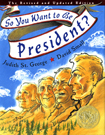

So You Want to Be President? Penguin Group
INTRODUCTION
So you want to be president! Why not? Presidents have come in every variety. They've been generals like George Washington and actors like Ronald Reagan, big like William Howard Taft and small like James Madison, handsome like Franklin Pierce and homely like Abraham Lincoln. From the embarrassment of skinny-dipping John Quincy Adams to the mischievous adventure of Theodore Roosevelt's pony, Judith St. George shares the backroom facts, the spitfire comments, and the comical anecdotes that have been part and parcel of America's White House. Hilariously illustrated by Caldecott honor-winning artist David Small, this celebration shows us the foibles, quirks, and the humanity of forty-one men who have risen to one of the most powerful positions in the world.

TEN TIPS
When using So You Want to Be President in your classroom:

l. Create a So You Want to Be President quiz show about presidents, asking details of their lives that would identify them. Let students use "life lines," such as "phone a friend," and so on.

2. Research a particular president, then keep a journal as if you're that president; imagine a day or week of days in the president's life. Let some of the recollections be historical and some be humorous.

3. Make a comment on a president by sketching a political cartoon, or caricature, a la David Small. (You might want to make a study of political cartoonerie in the United States.)

4. Role-playing: Select a president that you want to represent, then role-play that president in a confrontation with another president over some historical issue.

Example: Dwight Eisenhower and George Washington over war as a way to solve a problem. Use examples from "your" life to prove your point. (Other possibilities: Teddy Roosevelt and Richard Nixon; William Clinton and Abraham Lincoln, etc.)

5. Give students famous sayings such as, "Speak softly and carry a big stick" and "Ask not what your country can do for you, but what you can do for your country," etc., and let them identify the presidents who said them.

6. Create a map, showing where all the presidents lived; can you draw any territorial conclusions?

7. Select a president and write an essay about which values you and this president share.

8. Discuss with another student what characteristics you think a president needs to become a great president. Which characteristics do presidents who failed have in common? Then share with the greater group.

9. You are running for president: In three minutes give a speech telling your "voting" audience what you want to do for your country if you are elected.

l0. Build a White House; include a floor plan, and consider which rooms you need to carry on the duties of president. Designate their functions.

Extra: Plan an election campaign. Decide what your slogan will be, what platform you will run on, and how you will reach your voting audience.

penguin

Brought to you by Penguin Young Readers Group.


The Penguin Group is the second-largest English-language trade book publisher in the world. The company possesses perhaps the world's most prestigious list of best-selling authors and a backlist of unparalleled breadth, depth, and quality. Penguin Young Readers Group features books by authors and illustrators including Judy Blume, Brian Jacques, Eric Carle, and beloved characters like Winnie-the-Pooh, Madeline, The Little Engine that Could, and many, many more.


Join TeacherVision
for $39.95 a year and start receiving benefits today!
Free 7-Day Trial

Highlights

President-Elect Obama

Get your students involved in the issues facing the U.S. President-elect with these activities, articles, and lessons. Imagine a day in the life of the new president, read the inaugural addresses from past presidents, teach your class about the Cabinet, and more.

January Events

Find educational resources for every day in January. Fill your January lessons with activities for Letter Writing Week (Jan. 4-11), Martin Luther King Jr Day (Jan. 19), Chinese New Year (Jan. 26), National Puzzle Day (Jan. 29), National Book Month.

After-School Activities

Enrich before- or after-school programs with fun and educational activities. This slideshow features games, arts & crafts, holiday activities, science projects, and more for all ages.

2009 Calendar

Incorporate fun seasonal events and landmark dates, with our 2009 Educators' Calendar. Each day of the year features links to activities related to whatever is being celebrated that day, week, or month, from Martin Luther King Day to Letter Writing Week!

Bulletin Boards

Whether you teach science, reading, art, or social studies, you're sure to find the perfect bulletin board to fit your current theme or topic of discussion.

Theme Library

Our comprehensive Theme Library organizes TeacherVision content by seasonal and academic themes – making it easier for you to offer cross-curricular lessons and appeal to all of your students' needs and interests.

Daily Printables

Add a TeacherVision widget to your blog, personalized homepage (such as iGoogle or Pageflakes), or social networking sites (such as Facebook). Our widgets feature a different fifth-grade language arts printable or fourth-grade math printable for each day of the year.